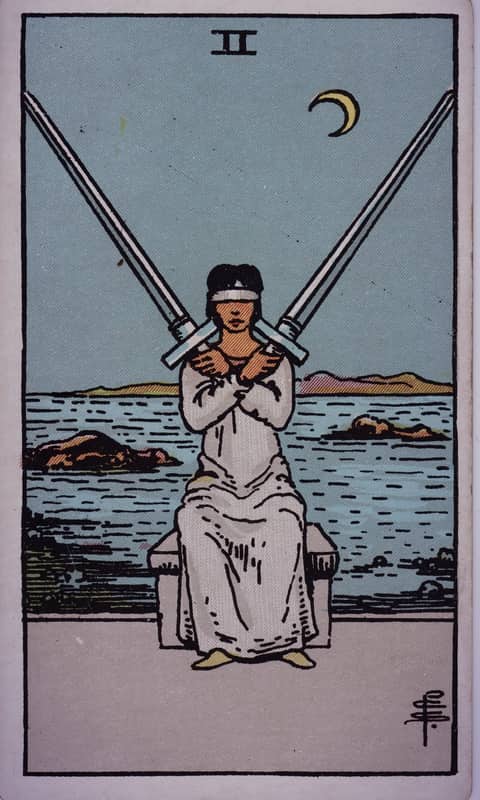
Some cards need a gentle introduction, and this is one of them. The Three of Swords is the deck's image of heartbreak, and its arrival can make your stomach drop. So let this be said first: tarot does not predict pain, and this card is not a sentence handed down. It is a mirror. It usually reflects a hurt you are already carrying, sometimes one so old you stopped noticing its weight, and its purpose is not to wound you again but to give the wound a name, because named pain is pain that can begin to move.
The Card's Imagery
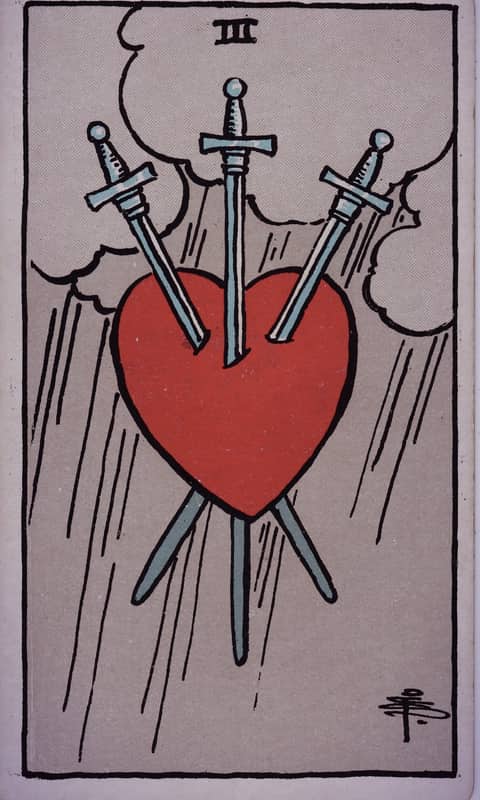
Three swords pierce a floating red heart against a backdrop of rain and storm clouds. It is one of the starkest images in the tarot, no people, no landscape, just the symbol and the weather. That starkness is honest: grief, in its first hours, really does simplify the world down to the hurt itself. But look closer. Rain, in almost every tradition, is release and cleansing; storms pass by definition. The heart is pierced, not destroyed. And the swords are thoughts, this is the suit of air, because so much of heartbreak's pain lives in the stories we replay. The card shows the anatomy of sorrow so that you can see yours more clearly.
Upright Meaning
Upright, the Three of Swords speaks to heartbreak, emotional pain, sorrow, grief, and separation. It may reflect something recent: a breakup, a betrayal, a friendship that ended, a loss you are still absorbing. Just as often, it points backward to a hurt that was never fully processed, one that quietly shapes how you love, trust, and protect yourself now.
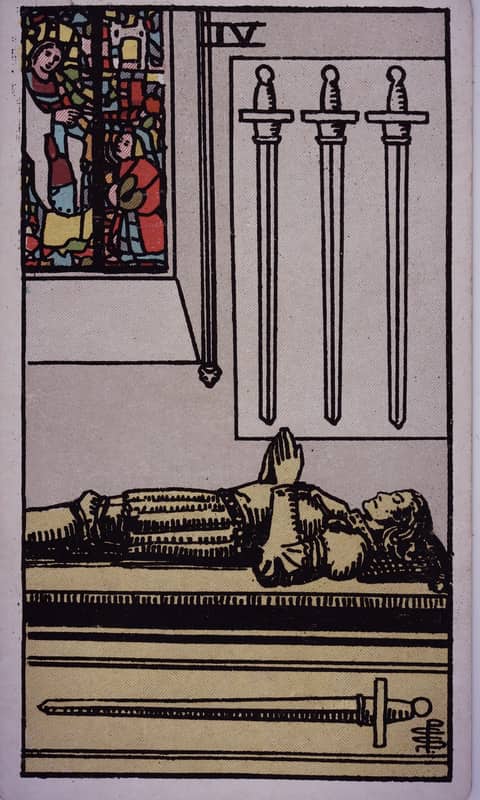
The card's invitation is counterintuitive: feel it. Our instinct is to rush past pain, minimize it, or intellectualize it into a lesson before we have even cried about it. The Three of Swords suggests that the way through grief is attention, not avoidance. Let it be as big as it is. Say what happened out loud. This card sits within a suit, which means it is a chapter, not the book; the Four of Swords follows it for a reason, rest comes after sorrow. If the pain feels larger than a card or a journal can hold, reaching out to a professional or someone you trust is not a detour from healing. It is healing.
Reversed Meaning
Reversed, the Three of Swords carries some of the kindest energy in the deck: recovery, forgiveness, moving on, releasing pain. The swords are loosening. You may notice that a memory that used to knock the wind out of you now only aches, or that you have gone days without rehearsing an old argument in your head. That is what healing actually looks like, not a clean before and after, but a gradual change in weather.
Forgiveness here deserves a careful word. It does not mean deciding the hurt was acceptable, and it does not require reconciliation. It means putting down the sword you have been holding against your own chest. Reversed, this card often invites one final act of release: the letter you write and do not send, the conversation that closes a door gently, the decision to stop checking their page.
In Love
In love readings, the Three of Swords most often reflects pain that is present or formative: a current conflict that has genuinely hurt, grief over an ending, or an old heartbreak that still stands guard over your heart. For couples, it can surface after harsh words or a breach of trust, and its invitation is honest repair, acknowledging the wound rather than smoothing it over.
For single people, it frequently asks whether a past hurt is still writing your rules. Reversed, it suggests the heart is mending and gently asks what openness might look like now. The calm crossing of the Six of Swords is often the next honest step after this card's storm.
In Career and Money
Professionally, the Three of Swords can reflect real workplace grief, and workplace grief is real: a layoff, a project you loved being cut, a mentor's departure, a betrayal of trust by a colleague or employer. We rarely give ourselves permission to mourn professional losses, and this card offers that permission.
Financially, it may accompany a loss that stung, and its guidance is to separate the event from the story: a setback is a fact; "I ruin everything" is a sword you are adding yourself. Reversed, it points to recovery, lessons integrated and enough distance to decide clearly again.
When This Card Keeps Appearing
If the Three of Swords keeps appearing in your readings, it is worth asking, gently, what grief has not yet had its full say. Recurring pulls rarely mean new pain is coming; far more often they mirror old pain that keeps knocking because it was never properly answered. Give it a formal audience: an hour with a journal, a conversation with someone wise, a small ritual of acknowledgment. Sorrow that is witnessed tends to soften. Sorrow that is managed tends to wait.
Journal Prompts
- What loss or hurt in my life have I summarized instead of actually feeling?
- What story do I replay most often about a past pain, and what would it mean to set that story down?
- Who or what helps me feel safely, and how can I invite more of that in right now?
FAQ
Does the Three of Swords mean my relationship is ending? No card can tell you that. The Three of Swords reflects the presence or memory of emotional pain, which can mean many things: an old wound resurfacing, a hard conversation, or grief that wants acknowledgment. What happens next remains in your hands.
Why do I keep pulling the Three of Swords? Recurring pulls often mirror grief that has not been fully felt or spoken. Rather than a warning, treat it as an invitation to give an old or current hurt some honest attention, through journaling, conversation, or support from someone you trust.
What does the Three of Swords reversed mean? Reversed, it leans toward recovery: forgiveness, releasing pain, and the slow process of moving on. The storm on the card is passing. It often appears when healing is already underway, even if it does not feel finished.
Pulled this card and want to know what it means in YOUR spread? Context changes everything, especially with a card this tender. Get your first personal reading for $1 and receive a reading that treats your question with the care it deserves.