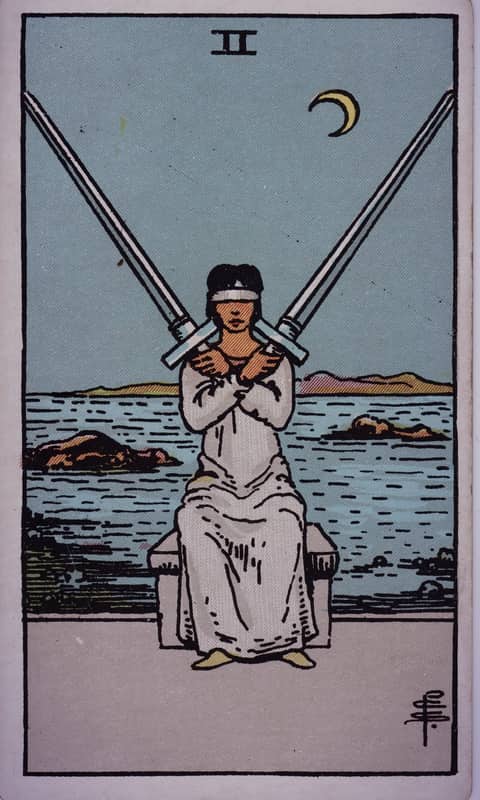
Everyone knows this posture: arms crossed, eyes closed, holding two options at arm's length because looking directly at either one would mean feeling something. The Two of Swords is the card of the deliberate stalemate, the decision balanced so carefully that the balancing itself has become a way of not deciding. It is one of the most human cards in the deck, because it understands that sometimes we choose blindness on purpose.
The Card's Imagery
A blindfolded figure sits on a stone bench, balancing two crossed swords, one over each shoulder. Behind them, a crescent moon hangs over a calm sea. The blindfold is the detail that gives the card away. No one put it there; the figure could remove it at any time. The crossed swords form a barrier over the heart, thought defending against feeling. Yet the scene behind them is telling: the sea, symbol of emotion and intuition, is calm, and the crescent moon suggests that inner guidance is available even in low light. The answer is literally at the figure's back. They only need to turn around, but turning around means putting down the swords first.
Upright Meaning
Upright, the Two of Swords speaks to difficult decisions, weighing options, stalemate, and denial. You may be caught between two choices that both cost something: two people, two jobs, two versions of your future. Or you may be avoiding a single choice by endlessly gathering more information, as if one more pro and con list might make the decision painless.
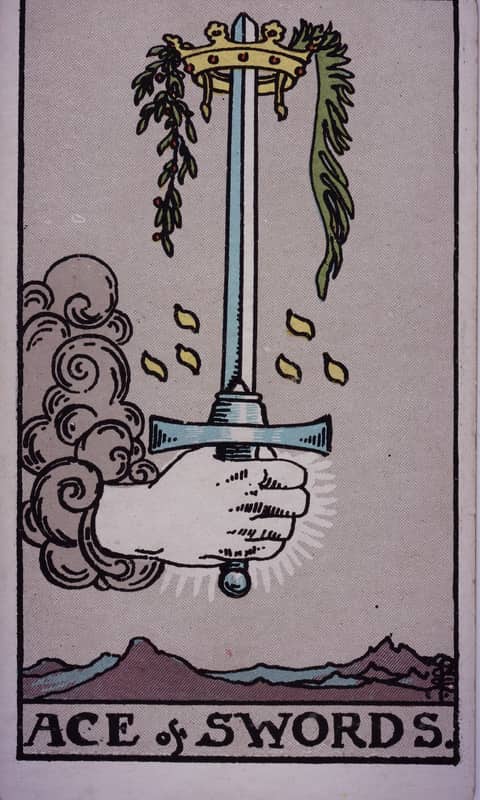
Here is the card's quiet insight: prolonged indecision is usually not a thinking problem. It is a feeling problem. Some part of you already leans one way, and the deliberation is a shelter from the grief, guilt, or fear that comes with admitting it. The upright Two of Swords does not rush you. Pauses can be wise, and not every fork in the road needs an immediate answer. But it does ask you to be honest about whether you are genuinely weighing options or simply postponing a truth. When you are ready, the clean clarity of the Ace of Swords is the energy that precedes this card, and returning to it, asking "what do I actually know?", often breaks the tie.
Reversed Meaning
Reversed, the Two of Swords reflects indecision, confusion, and information overload. The careful balance of the upright card has tipped into paralysis. You may have consulted so many friends, articles, and late night spirals that every option now looks equally impossible. Or external pressure is mounting, and the comfortable stalemate is no longer available.
The reversed card's invitation is to subtract rather than add. Stop researching. Mute the extra voices. Reduce the decision to its simplest honest form: which option can I live with, and which can I not? Sometimes the reversal also marks the blindfold slipping off on its own, a piece of information arriving that makes the choice for you. That can sting, but it also frees you from a deadlock you could not break alone.
In Love
In love readings, the Two of Swords often describes an impasse. Perhaps you and a partner have reached a standoff on a real issue, money, commitment, where to live, and both of you have stopped talking about it to keep the peace. Perhaps you are torn between two people, or between staying and leaving. The card gently notes that avoiding the conversation is itself a decision, one that gets made again every silent day.
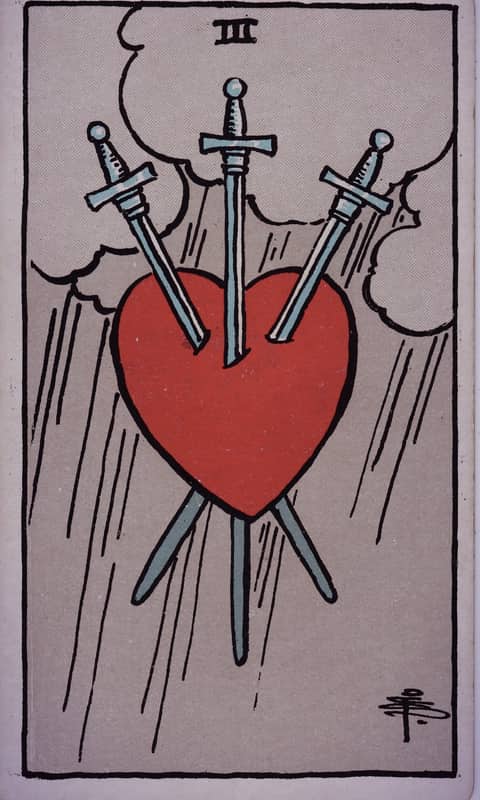
For single people, it can reflect a guarded heart: swords crossed over the chest, protecting a wound that never got properly acknowledged. If that resonates, the grief work of the Three of Swords may be the honest next chapter. Reversed in love, it often signals that the standoff is ending, tensions surfacing so they can finally be addressed.
In Career and Money
Professionally, this card frequently appears around competing offers, a stay or go decision about a job, or a workplace conflict where you are trying to remain neutral between two sides. Neutrality has a shelf life. The card asks whether your balance is genuine diplomacy or quiet self erasure.
Financially, the Two of Swords can reflect frozen decisions: money sitting unallocated, a purchase endlessly deferred, two financial paths you keep comparing without committing. Reversed, beware analysis paralysis dressed up as diligence. Set a decision deadline, choose your two or three most trusted inputs, and act on what you value rather than on the loudest recent opinion.
When This Card Keeps Appearing
If the Two of Swords keeps surfacing in your readings, there is likely one specific decision you have been living around rather than through. Try naming it out loud in one sentence. Notice which option makes your shoulders drop and which makes your jaw tighten; your body has usually voted already. The card keeps appearing not to scold you, but to remind you that the bench you are sitting on was never meant to be permanent.
Journal Prompts
- What decision am I currently keeping in a holding pattern, and what feeling would I have to face if I chose?
- If a wise friend described my situation back to me in plain words, what would they say I already know?
- What is one small, reversible step I could take toward either option this week?
FAQ
What does the Two of Swords mean when I cannot make a decision? It reflects your situation back to you: two options held in careful balance, and a part of you that would rather not look at either. The card suggests the deadlock usually breaks when you take off the blindfold and let yourself feel what you already know.
Is the Two of Swords a bad card? No. It describes a pause, not a punishment. Stalemates are often protective; you may not have been ready to choose. The card becomes uncomfortable only when a temporary pause hardens into long-term avoidance.
What does the Two of Swords reversed mean? Reversed, it often reflects the dam breaking: information overload, mounting pressure to decide, or a truth that can no longer be ignored. It invites you to simplify your inputs and return to what you actually value.
Pulled this card and want to know what it means in YOUR spread? The Two of Swords reads very differently next to different cards. Get your first personal reading for $1 and explore what this stalemate looks like in the context of your own question.